
Pike County Criminal Court Records
A criminal court record is the case file kept by the court after criminal process begins. In Pike County, criminal records may start with a warrant, first appearance, bond hearing, or preliminary hearing in Magistrate Court. Felony prosecution and major criminal proceedings move through Superior Court, where accusations, indictments, pleadings, motions, pleas, dispositions, sentences, and appeals become part of the court record. The Clerk of Superior Court maintains Superior Court criminal case records.
This is different from a jail roster or a booking record. Jail information shows custody status and booking facts. A criminal court record shows what the court did with the case. The charges themselves are only one part of the file. A full Pike County criminal court record can show whether a charge was amended, reduced, dismissed, tried, pleaded, sentenced, appealed, or restricted.
The Pike County Magistrate Court criminal information page documents the lower-court start of many criminal matters.
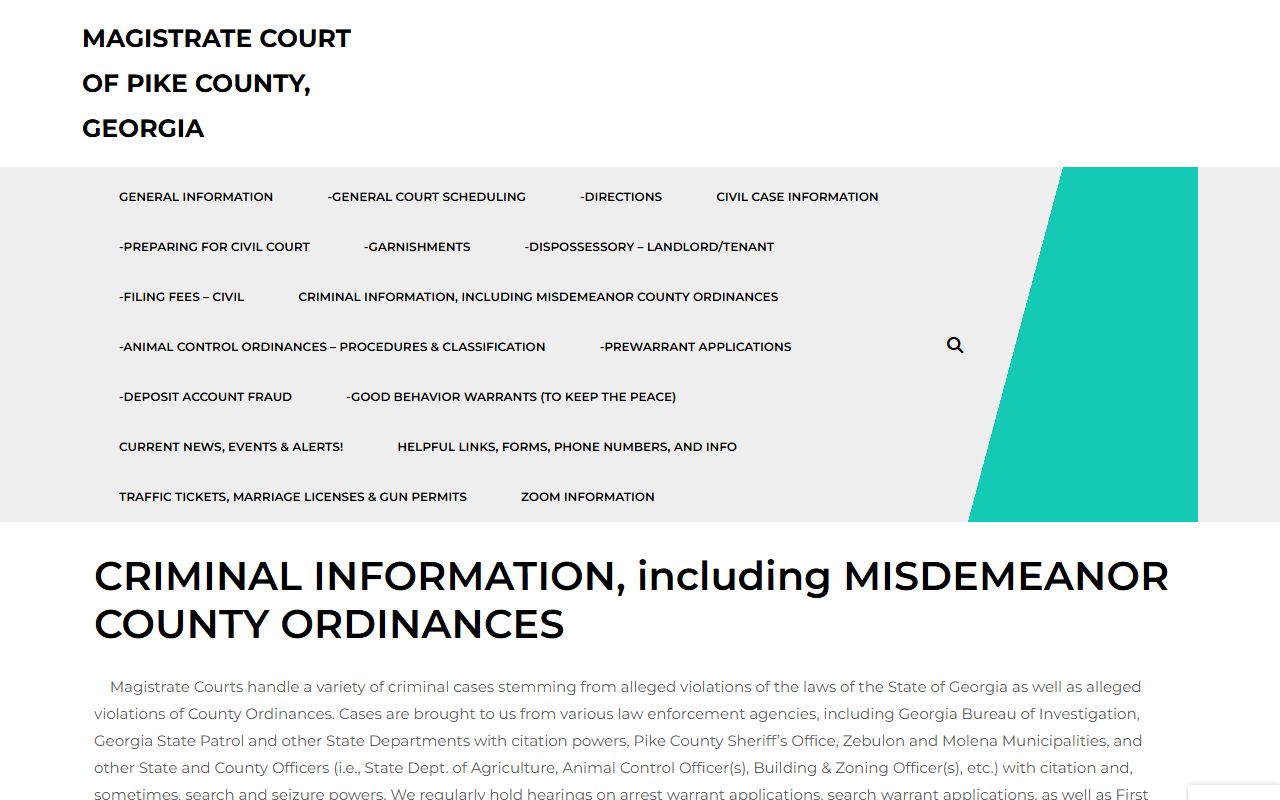
Those early criminal hearings are the bridge between an arrest event and the court case file that later shows prosecution outcomes.
Search Pike County Criminal Records
For Superior Court criminal case files, start with the Pike County Clerk of Superior Court. The Clerk's site links an official civil and criminal search at pikeclerkofcourtsearch.com. Research did not capture usable search fields from that site, so a name or case-number search may need to be followed by a phone call, mail request, counter request, or GSCCCA eCertification request for certified documents.
- Decide whether the matter is still in Magistrate Court or has moved to Superior Court.
- Use the Clerk's civil and criminal case search link for Superior Court criminal files if available.
- Search or request by defendant name, case number, date range, and criminal case type.
- Read the docket for filings, pleas, bond, hearings, disposition, sentence, and appeal activity.
- Request a certified copy from the Clerk or GSCCCA eCertification when an official document is needed.
Magistrate Court has no public case-search portal in the research, but it has direct phone and counter access. For first appearance, bond, preliminary hearing, county ordinance, and warrant records, use Pike County Magistrate Court at 770-567-2004. For statewide criminal-history restriction information, use the Georgia Bureau of Investigation, but do not treat GBI criminal history as the same file as the Pike County court case.
Pike County Criminal Case Flow
A Pike County criminal case may begin with arrest, a warrant application, or a citation. Magistrate Court handles first appearance and bond hearings, with research noting weekday times of 9:00 a.m. and 3:00 p.m. and Saturday 6:00 p.m. hearings when timing requires. Preliminary hearings are set on Thursdays at 1:30 p.m. If probable cause is found or the hearing is waived, the matter can be bound over for Superior Court prosecution.
Case flow: Charges Filed › Arraignment › Pretrial and Motions › Plea or Trial › Disposition › Sentencing
| Stage | What Happens |
|---|---|
| First appearance and bond | The court reviews rights, custody, charges, and release conditions after arrest. |
| Preliminary hearing | Magistrate Court reviews whether enough facts support the warrant or bind-over. |
| Arraignment | The defendant responds to the filed accusation or indictment. |
| Pretrial and motions | The parties litigate evidence, procedure, and case issues before plea or trial. |
| Plea or trial | The case resolves by plea, bench trial, jury trial, dismissal, or other court action. |
| Disposition and sentencing | The final result and punishment are entered, including probation, fines, jail, prison, or other terms. |
Pike County Criminal Record Fields
The criminal case file is more complete than a charge list. It can show the warrant or charging document, bond order, preliminary-hearing entry, accusation or indictment, plea, motions, hearing history, disposition, sentence, probation terms, fines, restitution, and appeal entries. It can also show if a charge was dismissed, amended, reduced, or restricted.
| Field | What It Shows |
|---|---|
| Case Number | The court's criminal file number, if assigned and public. |
| Defendant | The person charged in the criminal case. |
| Charge | The alleged offense filed by warrant, accusation, indictment, or related pleading. |
| Bond | Release decision, amount, and conditions when entered in the court file. |
| Plea | Guilty, not guilty, nolo, or another formal response. |
| Disposition | Dismissal, conviction, acquittal, plea result, nolle prosequi, bind-over, or other outcome. |
| Sentence | Jail, prison, probation, fine, restitution, program, or other punishment after conviction or plea. |
| Restrictions | Juvenile, sealed, redacted, restricted, or confidential material not open to the public. |
Pike County Charges vs Convictions
A charge is an accusation filed in court. A conviction is a result after a guilty plea, guilty verdict, or other conviction entry. Pike County criminal court records can show both, so reading the status is crucial. A person may have been charged and later had the charge dismissed, reduced, amended, bound over, or disposed in a way that does not equal conviction.
| Point | Charge | Conviction |
|---|---|---|
| Stage | Filed after arrest, warrant, accusation, or indictment. | Entered after plea or verdict. |
| Proof Level | May start from probable cause or prosecutor filing decision. | Requires a legal finding or accepted plea. |
| Record Meaning | Shows an allegation and case path. | Shows the court's final finding on guilt. |
| Status Changes | Can be amended, reduced, dismissed, or dropped. | Can lead to sentence, probation, appeal, or restriction eligibility. |
For a closer look at how court charges after arrest are filed and changed, use the Pike County arrest records and court charges page.
Pike County Criminal Case Roles
The Griffin Judicial Circuit District Attorney prosecutes state criminal cases for Fayette, Pike, Spalding, and Upson counties. The official DA site names David J. Studdard as Acting District Attorney in the research, and Magistrate helpful links list a Pike County District Attorney office contact at the courthouse. The DA's charging decisions, plea positions, dismissals, and record-restriction responses can affect what appears in the criminal court record.
The Georgia Public Defender Council lists the Griffin Circuit Public Defender for people who qualify for appointed counsel. Research identified William Imhoff as Circuit Public Defender and listed Thomaston and Griffin office contact information. The Public Defender is not the court-record custodian, but defense filings, motions, and court appearances can become part of the court file when filed in court.
The GPDC Griffin Circuit page is an official source for indigent defense office information.

Defense office information explains representation, but copies of Pike County criminal court records still come from the court clerk.
The GPDC Pike County listing also provides Pike-specific public defender routing.
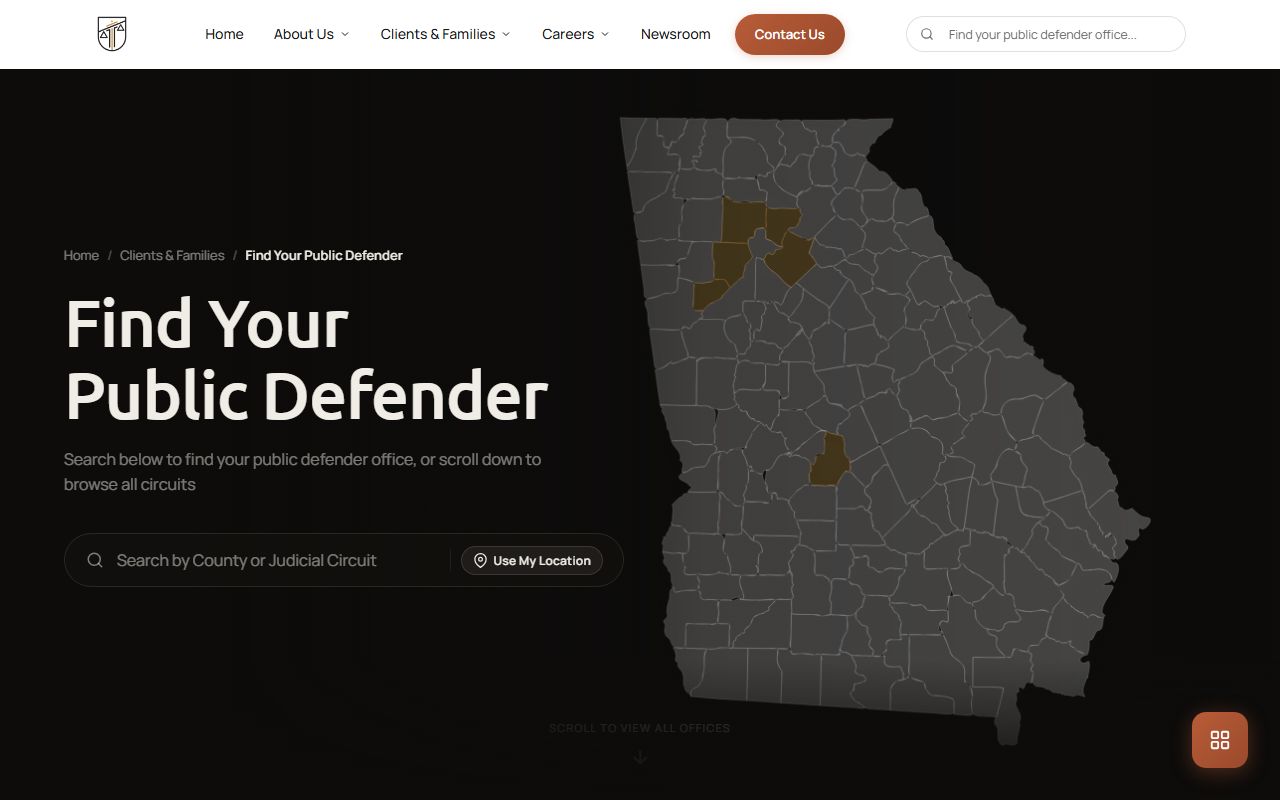
Use the court notice to confirm which office and courtroom apply to a specific Pike County criminal case.
Pike County Sealed Records
Georgia uses record restriction rather than the common term expungement for many criminal-history records. Under O.C.G.A. 35-3-37, eligible records may be restricted from public criminal-history dissemination. For arrests after July 1, 2013, GBI guidance says there is no application process with GBI; the person contacts the prosecutor. For older arrests, the process begins with the arresting agency.
| Point | Sealed or Restricted | Expunged Term |
|---|---|---|
| Georgia wording | Record restriction is the key state process for many criminal-history records. | Often used casually, but not always the Georgia legal term. |
| Public visibility | Limits access for non-criminal-justice purposes when approved. | May suggest removal, but court and agency rules control actual access. |
| Pike County route | Prosecutor, arresting agency, or court order depending on date and record type. | Do not assume a court file disappears without a valid order. |
| Still restricted | Juvenile, adoption, mental-health, and sealed court records may have separate access rules. | Those limits do not depend only on criminal-history restriction. |
The GBI record restriction page is the state source for criminal-history restriction rules.
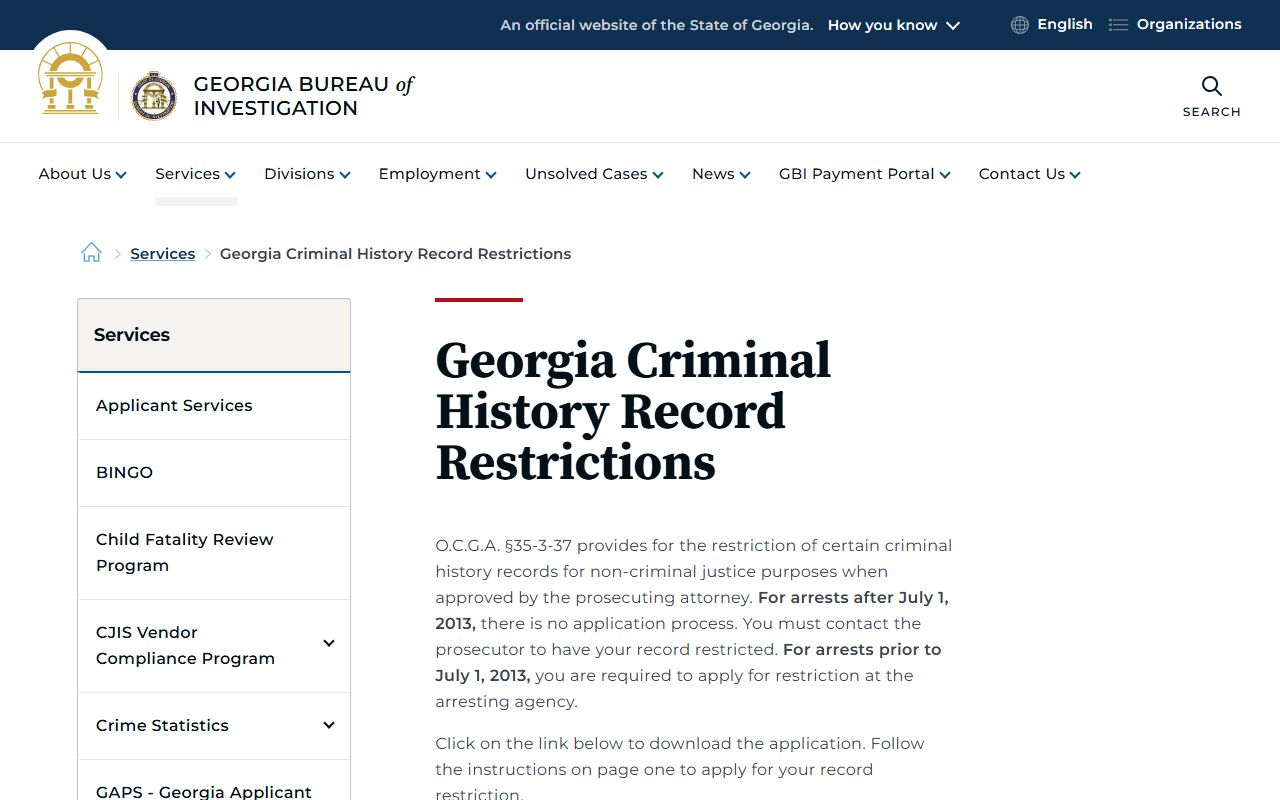
Restriction rules affect public criminal-history access, while court-file sealing may still require a court order or case-specific review.
Pike County Criminal Access Rules
Adult criminal court records are generally public unless a statute, court rule, sealing order, or privacy rule restricts them. Uniform Superior Court Rule 21 supports public access to Georgia court records unless sealed through the proper process or restricted by law. The Georgia Open Records Act applies broadly to government records, but criminal case files should be requested through the court that keeps them.
Juvenile criminal matters are not ordinary public records. Pike Juvenile records are managed through the Superior/Juvenile clerk, but access usually belongs to parties, lawyers, court personnel, authorized agencies, or people with a court order. Protected identifiers, financial data, medical information, minor details, and sealed charges may be redacted. Ongoing investigations can also limit non-court law-enforcement records.
Important: Criminal court records may include dismissed charges, so always read the disposition before drawing conclusions.
Pike County Pre-Warrant Records
Pre-warrant proceedings sit at the edge of criminal court records. Pike County Magistrate Court allows citizen warrant applications, but the application process is not the same as a conviction or even a final criminal charge. A judge reviews the facts and decides whether a warrant should issue. If a warrant issues and later proceedings occur, the record path can move through bond, preliminary hearing, and possible Superior Court prosecution.
The Pike County pre-warrant application page explains this local warrant-hearing route.
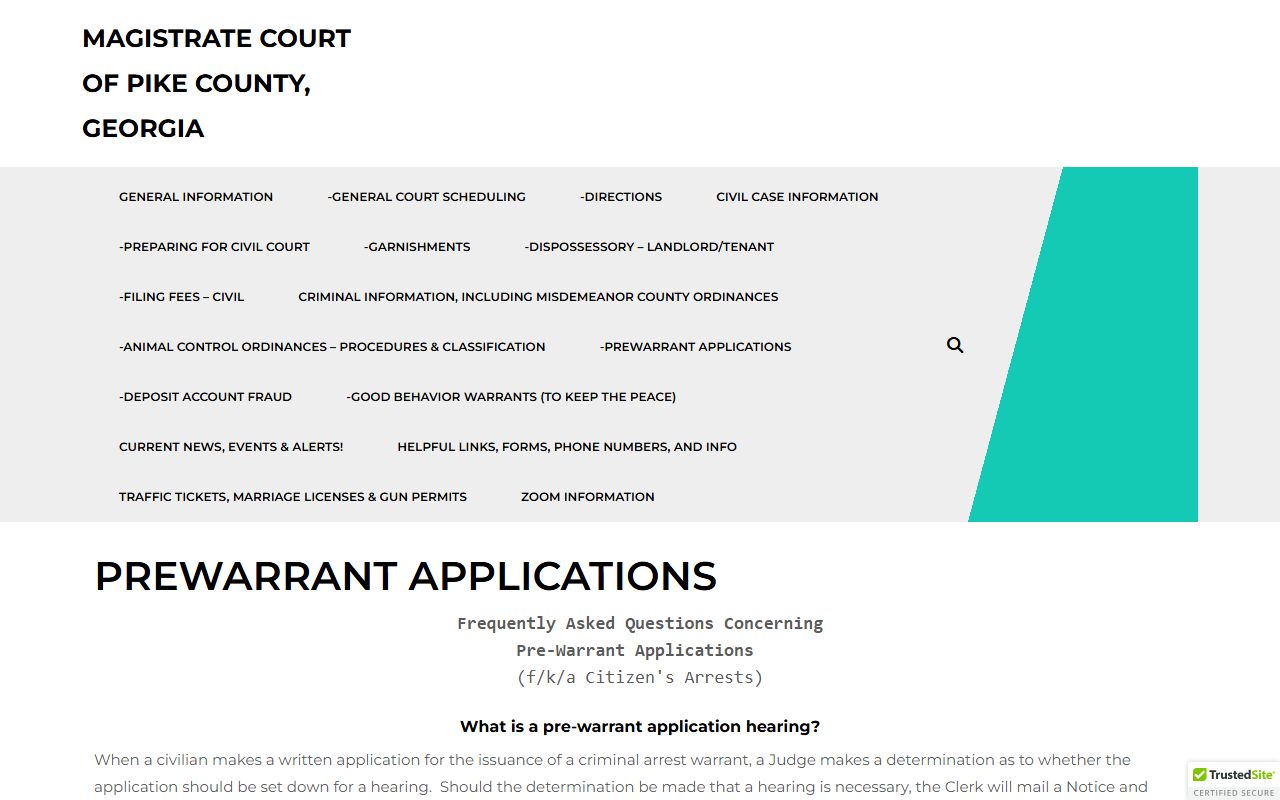
When reviewing Pike County criminal court records, separate pre-warrant allegations from filed charges, dispositions, and sentences.